
Every property and Starlink project is different. This guide explains the practical factors considered during professional installation and helps you prepare informed questions before work begins.
When the building is not the best dish location
A ground pole is useful when the home is blocked by trees, the roof is unsafe or unsuitable, the best sky view lies away from the structure, or the property owner wants to avoid mounting equipment to the building.
Common examples include a house sitting beneath mature trees while an open yard has clear sky, a metal or slate roof that should not be penetrated, or a roofline that cannot be reached safely. A pole can also separate the dish from planned roofing work, but only if the new location does not exchange one problem for a long, vulnerable cable run.
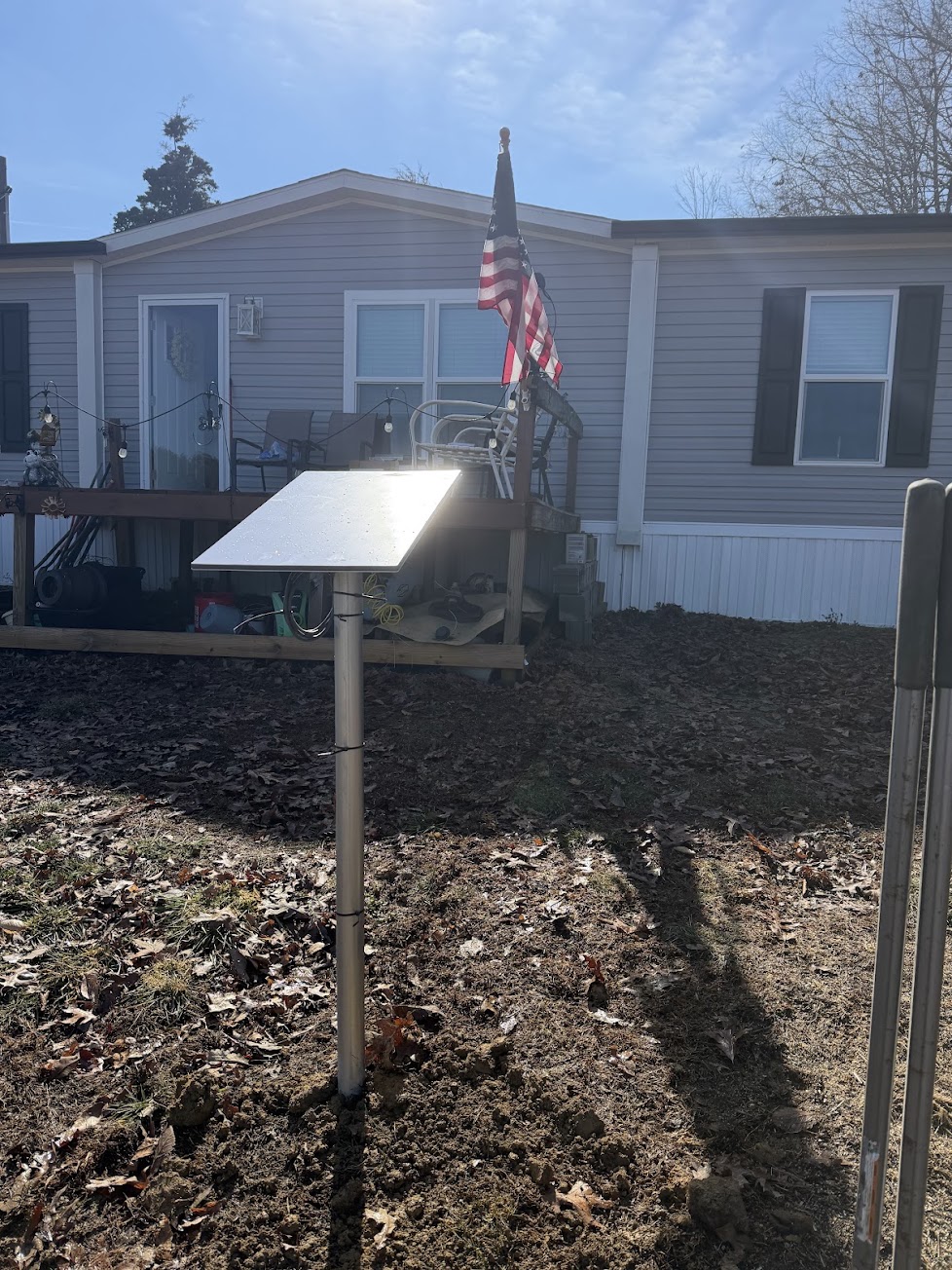
A freestanding pole creates a separate mounting location from the house. The route back to the router, protection from yard work, and the sky view still need planning.
Installation and photo: Mann's Starlink Contracting · View full photo ↗Finding a pole location that will remain usable
The proposed location must balance sky clearance, cable length, mowing and vehicle traffic, underground utilities, soil stability, drainage, future tree growth, and access for maintenance. Moving farther from the house is not automatically better if the cable route becomes impractical.
The obstruction tool should be used at approximately the height and position of the proposed dish, not from ground level several feet away. Consider how the sun, leaves, and property use change through the year. A location beside a garden may be clear today but conflict with a future shed, fence, or growing tree.
Need help with this on your Starlink system?
Mann's Starlink Contracting provides owner-installed service throughout Kentucky and an 11-state region.
Pole depth, conduit, and cable distance
A professional plan uses a stable pole and compatible adapter, places the dish beyond recurring obstructions, and protects the cable in conduit rather than burying the Starlink cable jacket directly. Underground utilities should be located before digging.
The pole must resist wind and stay plumb in the property's soil conditions. The cable route must remain within the supported length for the installed Starlink model, including vertical rises and interior travel—not just the straight-line yard distance. Sweeping conduit bends and accessible endpoints make replacement possible without digging again.
Everyday property hazards to plan around
Avoid placing the pole in a low wet area, beside a driveway, under a growing canopy, or beyond the supported cable distance. An exposed cable laid across the lawn is vulnerable to mowers, animals, ultraviolet light, and trip damage.
Place the pole beyond mower turns, trailer paths, livestock rubbing areas, snowplow routes, and places where children gather. Mark underground conduit before future fencing or landscaping. At the base of the pole, exposed cable needs physical protection because string trimmers and animals tend to reach precisely where conduit ends.
When a site survey saves money
A site survey is valuable when several distant locations look possible. It allows obstruction readings, route measurements, and pole placement to be evaluated before excavation or equipment purchases begin.
A survey is most valuable when trees create several marginal choices, when the route approaches the cable-length limit, or when excavation will be expensive. Comparing obstruction readings and measured routes first can prevent installing a permanent pole that still experiences interruptions or cannot reach the router.
Get a personal installation estimate.
Send your location and project details. Caleb will discuss your equipment and mounting needs, then confirm your complete quote before scheduling.
Questions first? Call Caleb directly at 270-940-4866.
Written byCaleb MannOwner and installer at Mann's Starlink Contracting. Caleb works directly with customers from project planning through final system setup.

