
Every property and Starlink project is different. This guide explains the practical factors considered during professional installation and helps you prepare informed questions before work begins.
Reusing a pathway can be useful—but not automatic
Reusing an existing route can reduce visible cable and avoid another wall opening, but only when the path is accessible, large enough, dry, and appropriate for the type of cable being installed.
A former satellite-TV coax route is often only a drilled hole or a cable stapled inside a wall, not an open pathway that another connector can pass through. Structured wiring panels and empty conduits offer better possibilities, but their destination may not match the best router location. Reuse should improve the installation rather than merely avoid one new opening.
How to evaluate an existing conduit or chase
Inspect conduit diameter, bend count, pull-string access, entry seals, cable fill, sharp edges, and whether the route contains electrical conductors. Starlink cable connectors are larger than the cable itself and may not pass through tight bends or small conduit.
A practical inspection looks at both endpoints and, when possible, the entire route. Fish tape or a pull string can reveal blockage, but it does not prove that the connector will negotiate every bend. Conduit should remain dry, have usable space after existing cables are counted, and terminate where the cable can be supported without a sharp turn.
Need help with this on your Starlink system?
Mann's Starlink Contracting provides owner-installed service throughout Kentucky and an 11-state region.
Connector size, bends, and cable separation
A usable low-voltage pathway should have gentle bends, protected openings, and enough space to pull the cable without stretching or damaging it. Ethernet may share a suitable low-voltage route, while separation from power wiring should follow applicable electrical practices.
Factory Starlink connectors require more clearance than bare Ethernet cable. Long pulls also increase friction, especially through corrugated conduit or several elbows. Low-voltage communications cable should not be bundled casually with household power; separation reduces safety concerns and electrical interference and may be required by the installation conditions.
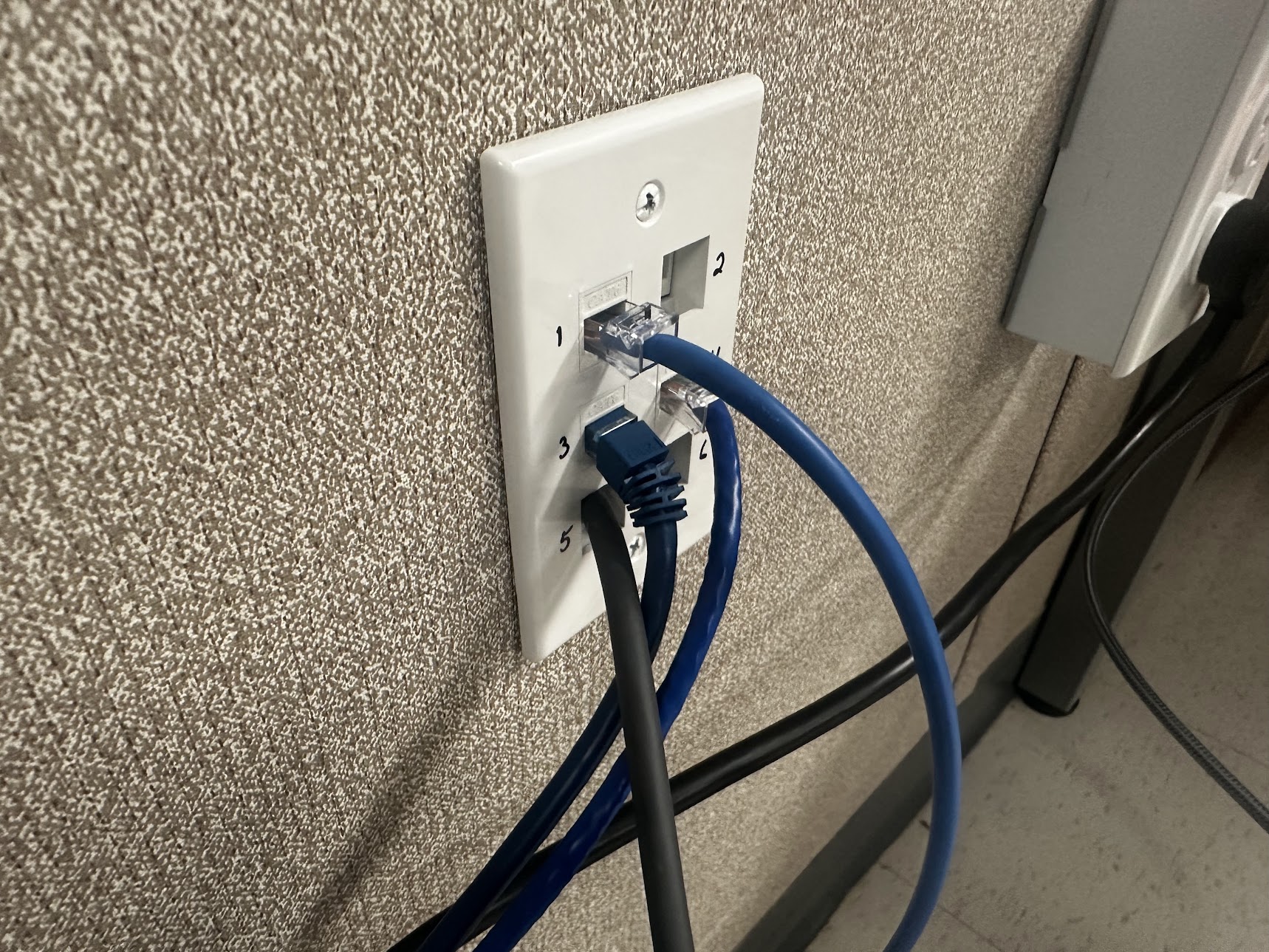
An Ethernet wall plate provides connection points inside the building. The cable route and connected network equipment determine how the wired connection is used.
Installation and photo: Mann's Starlink Contracting · View original field photo ↗Why cutting or forcing the cable creates future trouble
Do not cut a factory Starlink connector merely to fit a narrow opening, force it through a blocked path, or pull it beside line-voltage wiring without evaluating the route. Hidden damage can create intermittent disconnections that are difficult to diagnose.
A cut-and-spliced proprietary cable introduces extra contacts, changes weather resistance, and creates a hidden failure point. Excessive pulling can damage conductors without leaving an obvious mark on the jacket. The result may be a system that works during installation but disconnects when temperature, moisture, or cable movement changes.
When a new route is the better investment
Photograph both ends of the existing path and measure the conduit if possible. The installer can determine whether it is genuinely reusable or whether a new exterior or interior route will be more dependable.
A new route is preferable when the existing path is too narrow, inaccessible, wet, shared with power, or ends in the wrong room. A carefully located new penetration can be smaller, easier to seal, and easier to service than a complicated reused route. The goal is dependable access for the full life of the system.
Get a personal installation estimate.
Send your location and project details. Caleb will discuss your equipment and mounting needs, then confirm your complete quote before scheduling.
Questions first? Call Caleb directly at 270-940-4866.
Written byCaleb MannOwner and installer at Mann's Starlink Contracting. Caleb works directly with customers from project planning through final system setup.

