
Every property and Starlink project is different. This guide explains the practical factors considered during professional installation and helps you prepare informed questions before work begins.
Three generations of residential Starlink
Starlink's residential hardware has changed substantially since the original circular terminal. Customers commonly call the major versions first generation, second-generation actuated, and Gen 3. Starlink's current documentation may instead use names such as Standard Circular, Standard Actuated, Standard, Standard 4, or Standard 4 X.
All three use an electronically steered phased-array antenna and can provide useful service with clear sky. Their physical design, router, cable, power arrangement, installation process, and compatible mounts are not interchangeable.
First generation: the circular dish
The original residential Starlink is a large circular white terminal mounted on a motorized mast. During setup, its built-in motors position the face automatically. It normally uses the angular Gen 1 router, a separate power supply, and generation-specific cabling.
This hardware proved the residential Starlink concept, but it is heavier and its accessory ecosystem is now dated. Replacement routers, cables, power equipment, and mounts may require more careful compatibility planning. Newer Starlink mesh products also have limitations with the Gen 1 router.
Second generation: Standard Actuated
The next mainstream model changed from a round terminal to a smaller rectangular panel while retaining a motorized mast for self-orientation. It shipped with the upright Gen 2 router and a detachable proprietary Starlink cable.
Standard Actuated reduced terminal size and became widely used with short-wall, long-wall, pivot, ridgeline, ground-pole, and pipe-adapter solutions. Its Gen 2 router does not provide ordinary built-in Ethernet ports, so wired networks generally require the compatible Starlink Ethernet Adapter.
Need help with this on your Starlink system?
Mann's Starlink Contracting provides owner-installed service throughout Kentucky and an 11-state region.
Gen 3: the current non-actuated Standard
The newest residential Standard terminal is a larger, thin rectangular panel without orientation motors. The Starlink app guides the installer while the dish is manually positioned, then the terminal remains fixed. Removing the motor eliminates a moving mechanical assembly and makes low-profile, kickstand, pivot, wall, pipe-adapter, mobility, and non-penetrating installations more straightforward.
Current Standard specifications list a 110-degree field of view, software-assisted manual orientation, replaceable cable, and a separate Router 3. Router 3 adds Wi-Fi 6, tri-band 4x4 networking, two covered Ethernet LAN ports, and broader modern mesh compatibility.
Mounting hardware is generation-specific
A mount designed for the circular dish usually does not directly accept an actuated or current Standard terminal. Standard Actuated uses its narrow motorized mast, while the newest Standard uses a different kickstand and mount interface.
Starlink offers an adapter that can place the current Standard onto certain existing Standard Actuated mounts. That can preserve a well-installed wall, pivot, ground-pole, or ridgeline mount, but the structure, fasteners, cable path, clearances, and adapter compatibility still need inspection before reuse.
Why we install the newest Standard
For ordinary new residential projects, the current Standard is the best-supported and most serviceable choice. It combines current replacement parts and mounts with a removable cable, built-in Ethernet at Router 3, Wi-Fi 6, simpler manual positioning, and no dish-orientation motor to maintain.
“Superior” does not mean every speed test will automatically be faster. Network congestion, service plan, obstructions, Wi-Fi conditions, and location still affect performance. The practical advantage is a newer complete system with better networking and a current installation ecosystem.
When upgrading makes sense
An upgrade is especially worthwhile when an older terminal has motor faults, weathered cable, a failing power supply, limited Ethernet options, weak router coverage, or hard-to-source accessories. It also creates an opportunity to correct an obstructed location, unsafe cable route, or aging mount.
A working older terminal does not always need immediate replacement. Before upgrading, compare equipment cost, current service needs, mount compatibility, cable routing, account activation, and the condition of the existing system. A thoughtful upgrade replaces the complete weak point—not merely the shape on the roof.
Get a personal installation estimate.
Send your location and project details. Caleb will discuss your equipment and mounting needs, then confirm your complete quote before scheduling.
Questions first? Call Caleb directly at 270-940-4866.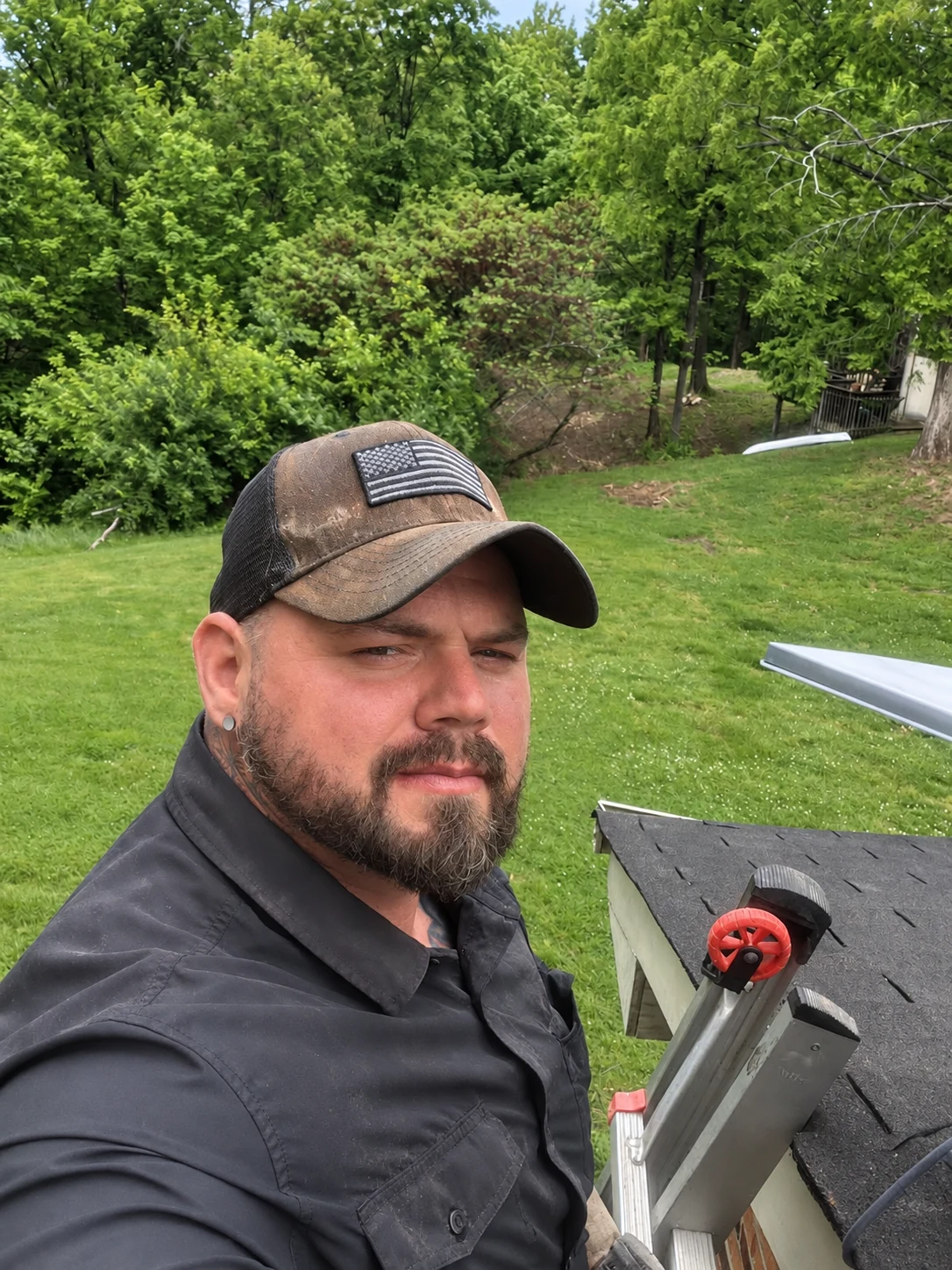
Written byCaleb MannOwner and installer at Mann's Starlink Contracting. Caleb works directly with customers from project planning through final system setup.

