
Every property and Starlink project is different. This guide explains the practical factors considered during professional installation and helps you prepare informed questions before work begins.
Starlink does not need a nearby terrestrial tower
Traditional fixed wireless often needs a line of sight to a tower on the horizon. Starlink communicates with satellites across the sky, so being in a valley does not automatically prevent service.
Traditional fixed wireless points toward one tower, so a ridge between the customer and tower can end service. Starlink uses satellites moving across the sky, which means a valley can work well when the required sky region remains open.
Nearby objects matter more than elevation alone
What matters most at the installation point is the required sky view. Nearby ridges, steep slopes, tall trees, cliffs, buildings, and roof sections can still block portions of that view depending on direction and elevation.
A distant ridge low on the horizon may never enter the dish's needed field, while one tree twenty feet away can cover a large portion of it. Roof peaks, cliffs, and steep slopes matter according to their apparent angle from the dish—not simply their absolute height.
Need help with this on your Starlink system?
Mann's Starlink Contracting provides owner-installed service throughout Kentucky and an 11-state region.
How to scan a valley or mountain property
Use the Starlink obstruction tool at realistic mounting heights and compare several property locations. Prioritize broad open sky over simply choosing the highest convenient spot on the building.
Use the obstruction tool at several realistic mounting positions and heights. Compare open yards, roof planes, outbuildings, and clearings. Seasonal foliage and wet branches should be considered, along with a cable route that remains within supported length.
Avoid the ‘highest roof’ assumption
Do not reject a valley property based only on elevation or assume a mount on the tallest roof automatically solves trees overhead. Likewise, a distant mountain visible on the horizon may matter less than one nearby branch.
The tallest point can be harder to service, more exposed to wind, and still sit beneath trees. A lower position on the correct side of the house or a modest ground pole in an open corridor may produce a broader sky view and a safer installation.
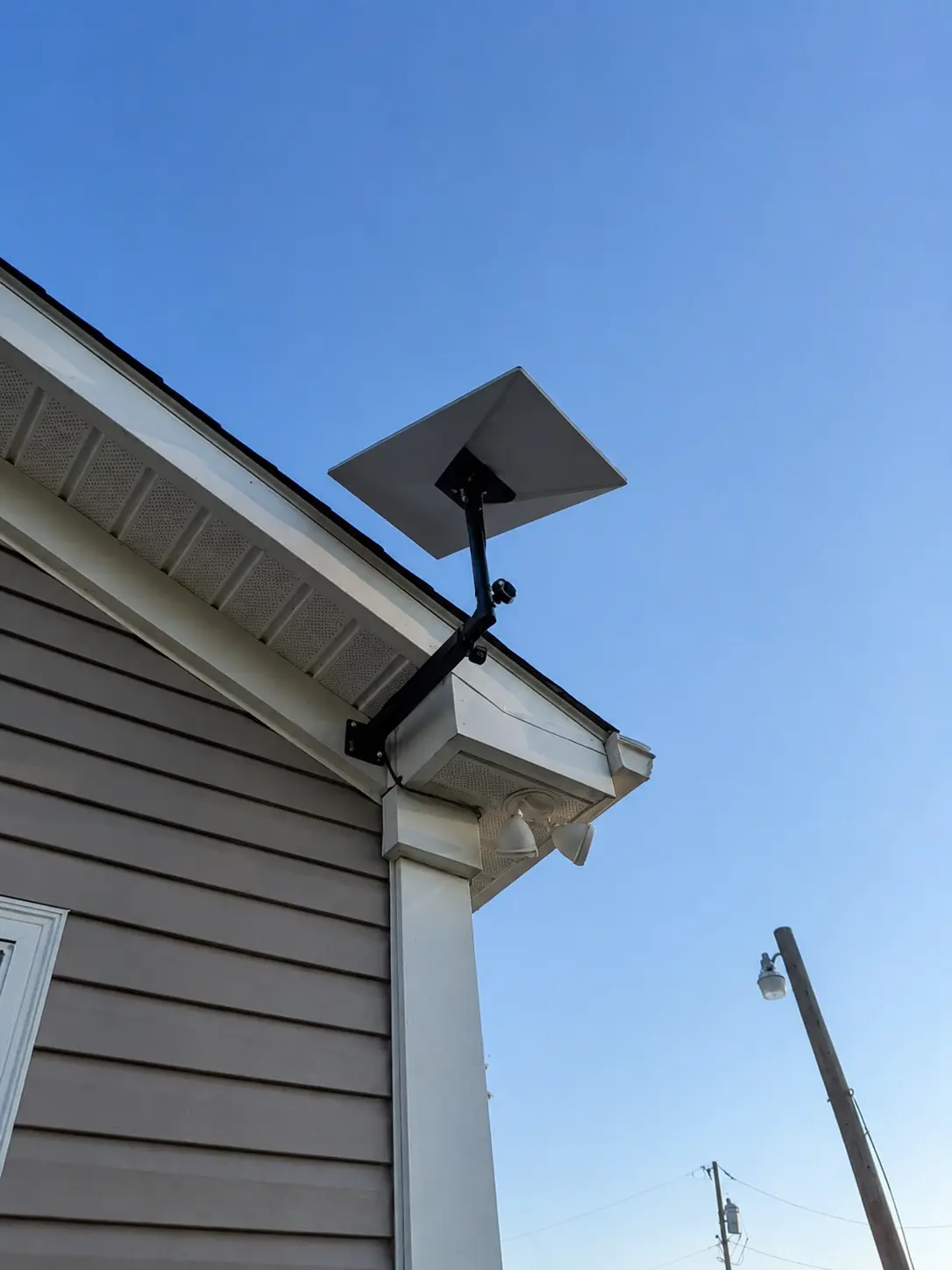
The bracket places the dish above the roof edge while the cable follows the outside of the house. Check the attachment and sky view for the actual property.
Installation and photo: Mann's Starlink Contracting · View full photo ↗Use a survey when the sky view is uncertain
Evaluate the actual sky from the proposed dish position. A site survey can resolve uncertainty on mountainous or wooded property before a permanent mount or long cable route is purchased.
Mountain properties with several partial openings benefit from recorded scans and measured routes before hardware is installed. A survey can distinguish a workable valley from a canopy problem and prevent paying for height that does not improve visibility.
Get a personal installation estimate.
Send your location and project details. Caleb will discuss your equipment and mounting needs, then confirm your complete quote before scheduling.
Questions first? Call Caleb directly at 270-940-4866.
Written byCaleb MannOwner and installer at Mann's Starlink Contracting. Caleb works directly with customers from project planning through final system setup.

