
Every property and Starlink project is different. This guide explains the practical factors considered during professional installation and helps you prepare informed questions before work begins.
A winter sky test can be misleading
A location that looks open in winter can become obstructed when leaves return. Wet foliage can be especially disruptive, and moving branches may create repeated brief interruptions rather than one obvious total blockage.
Bare branches reveal large patches of sky and may produce excellent winter results. When spring foliage fills those spaces, the same location can develop recurring interruptions. A permanent mount should be selected for the most obstructed season, not only for conditions on installation day.
Why leaves interrupt the Starlink path
Consider the mature canopy, tree species, growth direction, distance, elevation, spring leaf-out, storm movement, and whether neighboring property trees may change. Review the app's obstruction history across seasons.
Starlink communicates across a moving portion of the sky. Leaves, especially when wet, absorb and scatter the signal; swaying branches make the interruption pattern change second by second. This can be more disruptive to calls and gaming than a consistently slower connection.
Need help with this on your Starlink system?
Mann's Starlink Contracting provides owner-installed service throughout Kentucky and an 11-state region.
Evaluate the mature canopy
Choose placement using the worst expected canopy rather than today's easiest view. A higher wall, different roof plane, ground pole in a clearing, or selective work by a qualified tree professional may provide lasting clearance.
Look at tree height, distance, species, crown width, direction of future growth, and whether the trees belong to the customer or a neighbor. Use old summer photographs when inspecting in winter. The obstruction map collected over time is more valuable than one quick scan.
Placement choices for wooded property
Do not rely on a narrow visible gap, trim trees without permission, or assume snow-season performance predicts summer reliability. Raising the dish slightly may not overcome a broad overhead canopy.
Moving to another roof plane, using an under-eave extension, installing a ground pole in a clearing, or choosing a different building may produce better clearance. Raising the dish a few feet helps only when it actually opens the required view; it cannot see through a broad overhead canopy.
Monitor performance through leaf-on season
Photograph the property in leaf-on conditions when possible and monitor obstruction events after spring growth. Relocation is more effective than repeatedly troubleshooting a known seasonal obstruction.
Review obstruction events after leaves fully develop and again after storms change the canopy. If interruptions follow the leaf cycle, repeated router resets will not help. Relocation or professional tree work—performed only with permission—is the durable response.
Get a personal installation estimate.
Send your location and project details. Caleb will discuss your equipment and mounting needs, then confirm your complete quote before scheduling.
Questions first? Call Caleb directly at 270-940-4866.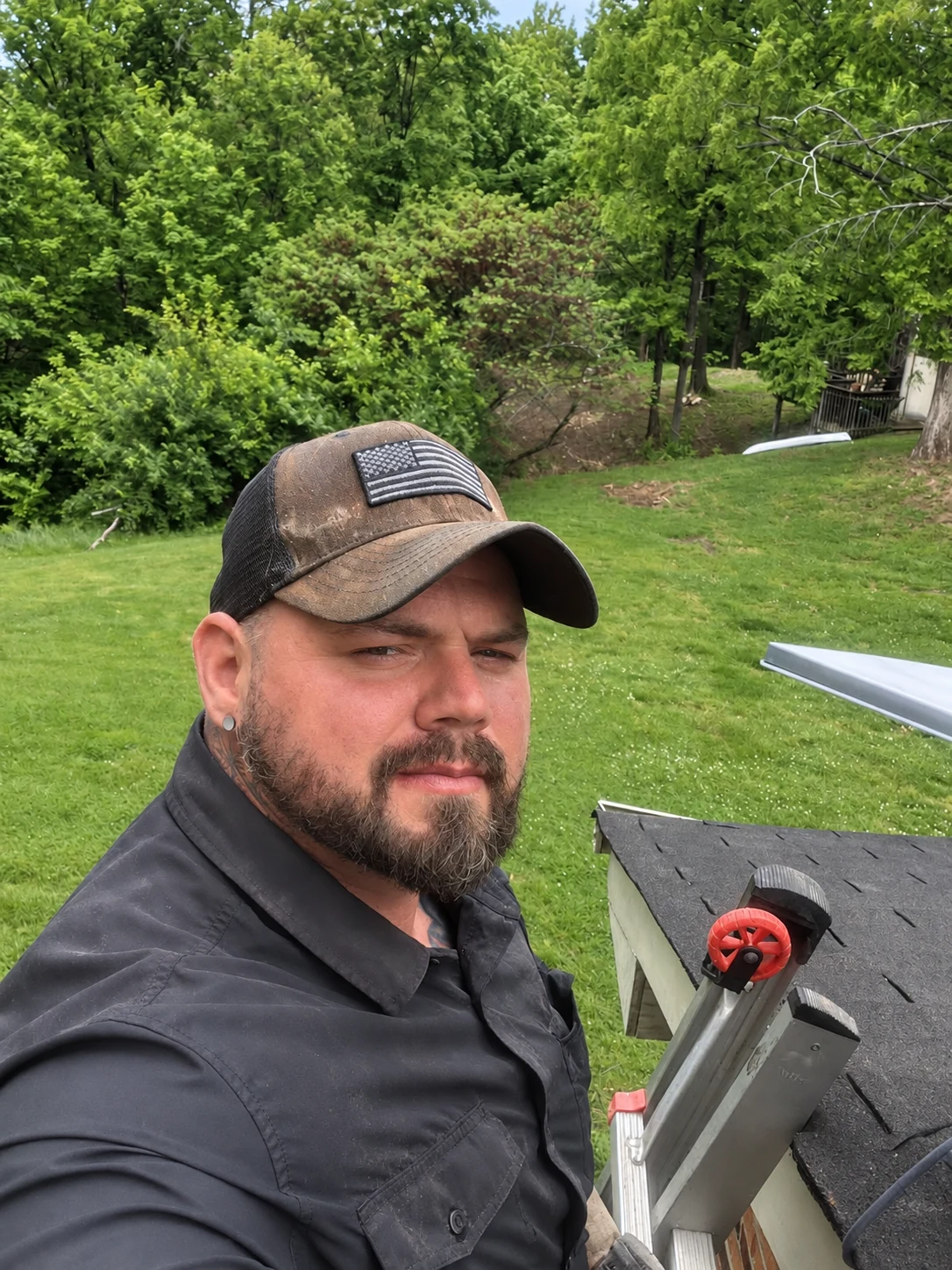
Written byCaleb MannOwner and installer at Mann's Starlink Contracting. Caleb works directly with customers from project planning through final system setup.

